0%

Table of Contents

Basic dyes for paper represent a crucial component in the coloration of various paper products, ranging from packaging materials to high-quality printing stocks. These dyes, characterized by their vibrant hues and relatively low cost, play a significant role in the global paper industry. Understanding their properties, applications, and future trends is essential for manufacturers, researchers, and end-users alike. The demand for aesthetically pleasing and functionally effective paper continues to rise, driving innovation in dye technologies and sustainable practices.

Globally, the paper industry is a multi-billion dollar market, deeply intertwined with communication, packaging, and hygiene. Basic dyes for paper constitute a significant portion of the chemical inputs required for its production. Factors like population growth, increasing literacy rates, and the expanding e-commerce sector are all contributing to the ongoing need for paper-based products, intensifying the importance of efficient and environmentally responsible dye solutions.

The use of basic dyes allows for a wide spectrum of colors to be achieved, making them incredibly versatile. They offer an economical coloring solution, making them a popular choice across different paper grades and applications, directly impacting the visual appeal and marketability of finished goods.

Exploring the Versatile Applications of Basic Dyes for Paper Production

The Core Principles of basic dyes for paper

Exploring the Versatile Applications of Basic Dyes for Paper Production

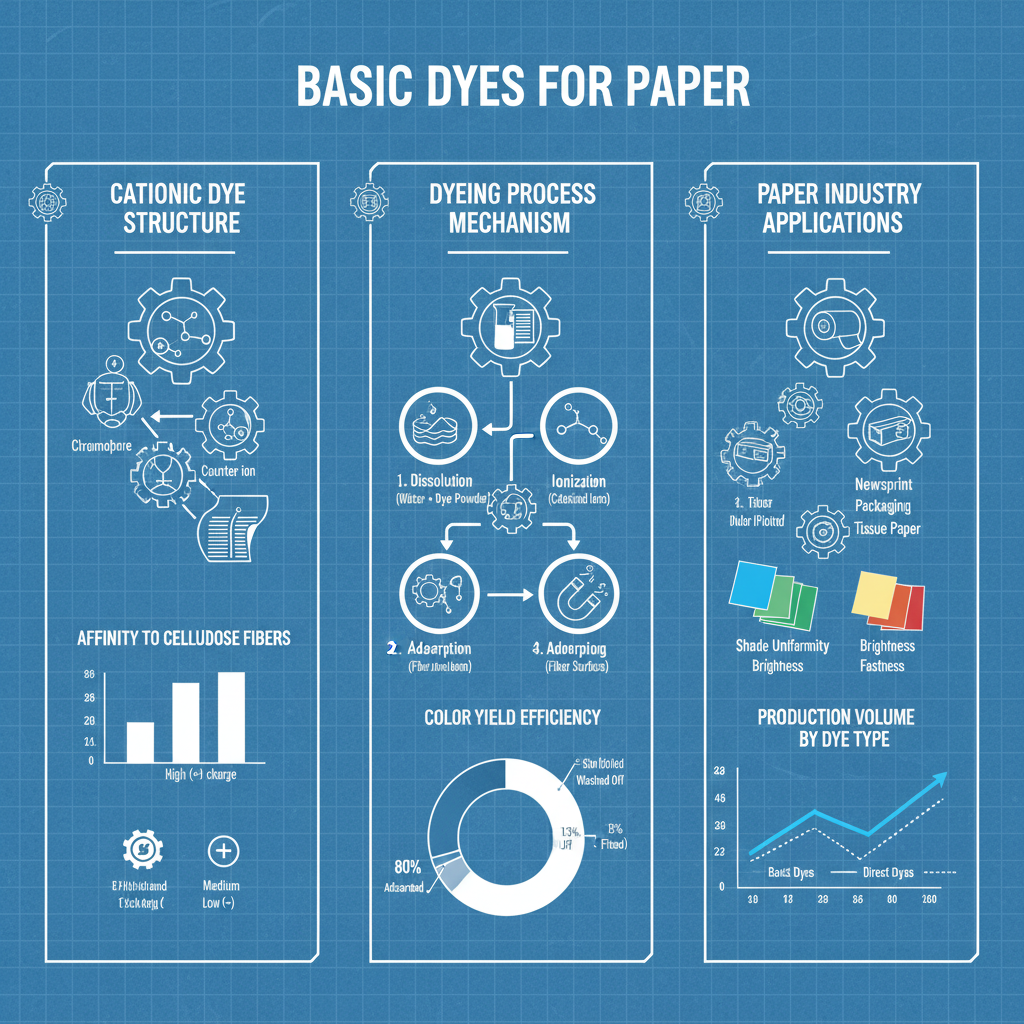
The fundamental principle behind the application of basic dyes to paper lies in the electrostatic interaction between the positively charged dye molecules and the negatively charged cellulose fibers present in paper. This affinity results in dye fixation, imparting color to the paper. This process is significantly impacted by pH levels, temperature, and the presence of auxiliary chemicals.

Understanding the intricacies of this interaction is crucial for achieving consistent and optimal coloration. Factors like dye concentration, application method, and post-treatment processes all play a role in the final color intensity, fastness, and overall quality of the dyed paper product. basic dyes for paper are therefore carefully formulated to maximize this interaction.

Global Market Dynamics of basic dyes for paper

The global market for basic dyes for paper is heavily influenced by the growth of the paper and packaging industries, particularly in emerging economies like China and India. Increasing demand for printed materials, corrugated cardboard, and specialty papers is driving consumption. Fluctuations in raw material prices and environmental regulations also significantly impact market dynamics.

Current market trends indicate a growing preference for eco-friendly and sustainable dye solutions. Manufacturers are increasingly investing in research and development to create dyes with reduced environmental impact and improved performance characteristics. The shift toward digital printing also presents both challenges and opportunities for dye manufacturers.

According to a recent report by the UN, the global paper production is projected to increase by 3% annually over the next five years, creating sustained demand for high-quality basic dyes. Competition within the market is fierce, with key players focusing on innovation, cost-effectiveness, and customer service.

Defining basic dyes for paper: A Chemical Perspective

Basic dyes for paper are cationic (positively charged) dyes that are primarily used to color cellulosic materials like paper. Chemically, they are typically salts of sulfonated aromatic amines. These dyes possess a vibrant, often bright coloration due to their conjugated molecular structures. Their water solubility facilitates their application in aqueous dyeing processes.

Their molecular structure allows them to readily bond with the anionic sites on cellulose fibers. This bonding mechanism is primarily electrostatic. basic dyes for paper, in particular, offer a range of hues and are preferred for their cost-effectiveness and ease of application.

The specific chemical composition of a basic dye influences its shade, lightfastness, and wash fastness. Understanding these structural-property relationships is crucial for tailoring dyes to specific paper applications and performance requirements.

Key Characteristics of basic dyes for paper

Several key characteristics define the performance and suitability of basic dyes for paper. These include color intensity, brightness, and shade range. Dye solubility and its ability to evenly distribute within the paper matrix are also crucial.


Applications Across Industries Utilizing basic dyes for paper

Basic dyes for paper find widespread use in various industries. The packaging industry utilizes them for coloring cardboard boxes and paper bags, enhancing brand recognition and product appeal. The printing and publishing sectors rely on these dyes for producing colored papers, magazines, and books.

The tissue and hygiene product manufacturers employ basic dyes for coloring paper towels, tissues, and toilet paper. Additionally, specialized applications include the coloring of filter papers, security papers (to detect tampering), and decorative papers used in crafting and artistic endeavors.

The Advantages of Utilizing basic dyes for paper

One of the primary advantages of using basic dyes for paper is their cost-effectiveness. They generally offer a lower price point compared to other dye classes, making them attractive for large-scale production. Their bright and vibrant color range is another key benefit, providing a wide array of aesthetic options.

Furthermore, basic dyes are relatively easy to apply, requiring simpler dyeing processes and equipment. This ease of use translates into reduced production costs and increased efficiency. However, it’s crucial to acknowledge their limitations in terms of lightfastness and wash fastness, which may necessitate protective coatings or careful application techniques.

Future Innovations in basic dyes for paper Technology

Research and development efforts are currently focused on improving the fastness properties of basic dyes for paper, particularly their resistance to light and washing. Nanotechnology is being explored to encapsulate dye molecules, enhancing their stability and preventing fading.

Another key area of innovation is the development of more sustainable and environmentally friendly basic dyes. This includes utilizing renewable raw materials and reducing the use of harmful chemicals in the manufacturing process. Digital printing technologies are also driving demand for dyes with specific characteristics optimized for inkjet and laser printing.

The pursuit of bio-based basic dyes is also gaining momentum, aiming to reduce reliance on petroleum-derived chemicals and minimize the environmental footprint of paper coloration. This reflects a broader industry trend towards circular economy principles and responsible chemical management.

FAQS

What are the primary environmental concerns associated with using basic dyes for paper?

The main concerns stem from the potential for wastewater contamination due to dye discharge. Some basic dyes can be persistent in the environment and may contain heavy metals or other harmful chemicals. However, modern wastewater treatment technologies and the development of eco-friendly dye alternatives are mitigating these risks. Regulations regarding dye effluent discharge are becoming increasingly stringent worldwide.

How do basic dyes compare to other dye classes in terms of cost and performance?

Basic dyes generally offer the lowest cost per unit of coloration compared to direct, reactive, or acid dyes. However, they typically exhibit lower lightfastness and wash fastness. Direct dyes offer improved fastness but are more expensive, while reactive and acid dyes provide superior fastness but are considerably more costly and require more complex application processes. Choosing the appropriate dye class depends on the specific application and performance requirements.

What are the best methods for optimizing dye uptake and color uniformity when using basic dyes for paper?

Optimizing pH levels is crucial, as basic dyes perform best in slightly acidic conditions. Proper agitation and temperature control during dyeing are also essential for uniform dye distribution. Using appropriate dispersing agents can prevent dye aggregation and improve solubility. Additionally, ensuring the paper pulp is thoroughly cleaned and free of impurities will enhance dye uptake.

Are there any regulations governing the use of basic dyes in paper production?

Yes, various environmental regulations, such as those established by the EPA (Environmental Protection Agency) in the United States and REACH (Registration, Evaluation, Authorisation and Restriction of Chemicals) in Europe, govern the use of dyes in paper production. These regulations aim to limit the discharge of harmful chemicals and ensure safe working conditions. Manufacturers must comply with these regulations to maintain market access.

How can I improve the lightfastness of paper dyed with basic dyes?

Lightfastness can be improved by applying a UV-absorbing coating to the dyed paper. Alternatively, using a combination of basic dyes with lightfast pigments can enhance overall light resistance. Reducing the dye concentration and optimizing the dyeing process to minimize dye residue on the paper surface can also contribute to improved lightfastness. Employing mordants can also help fix the dye, enhancing its stability.

What is the difference between direct application and exhaust application of basic dyes for paper?

Direct application involves adding the dye directly to the paper pulp during the papermaking process, providing a more uniform color. Exhaust application, on the other hand, involves immersing the paper in a dye bath and allowing the dye to be absorbed from the solution. Exhaust application is often used for batch dyeing or for achieving specific shade variations. The choice between these methods depends on the desired color intensity, equipment availability, and production volume.

Conclusion

In conclusion, basic dyes for paper remain a vital component of the paper industry, offering a cost-effective and versatile solution for coloration. Understanding their chemical properties, applications, and limitations is crucial for manufacturers seeking to optimize production processes and meet evolving market demands. The ongoing push towards sustainability is driving innovation in dye technologies, leading to the development of eco-friendly alternatives and improved fastness characteristics.

Looking ahead, continued research into nanotechnology, bio-based dyes, and optimized dyeing techniques will further enhance the performance and environmental profile of basic dyes for paper. By embracing these innovations and adhering to stringent environmental regulations, the paper industry can ensure a sustainable future for this essential material. For more information and a wide range of basic dyes for paper, visit our website today!

William Davis

William Davis

William Davis is the North China Regional Sales Manager for Xingtai Yanhong Chemical. Based in Beijing, William is responsible for developing and managing sales strategies across a key region for the company. He possesses extensive knowledge of the Chinese textile market and a strong network of industry contacts. William holds
Previous Exploring the World of Textile Industry Dyes and Sustainable Innovations
Next Exploring the Versatile Applications of Basic Dye in Textile Manufacturing