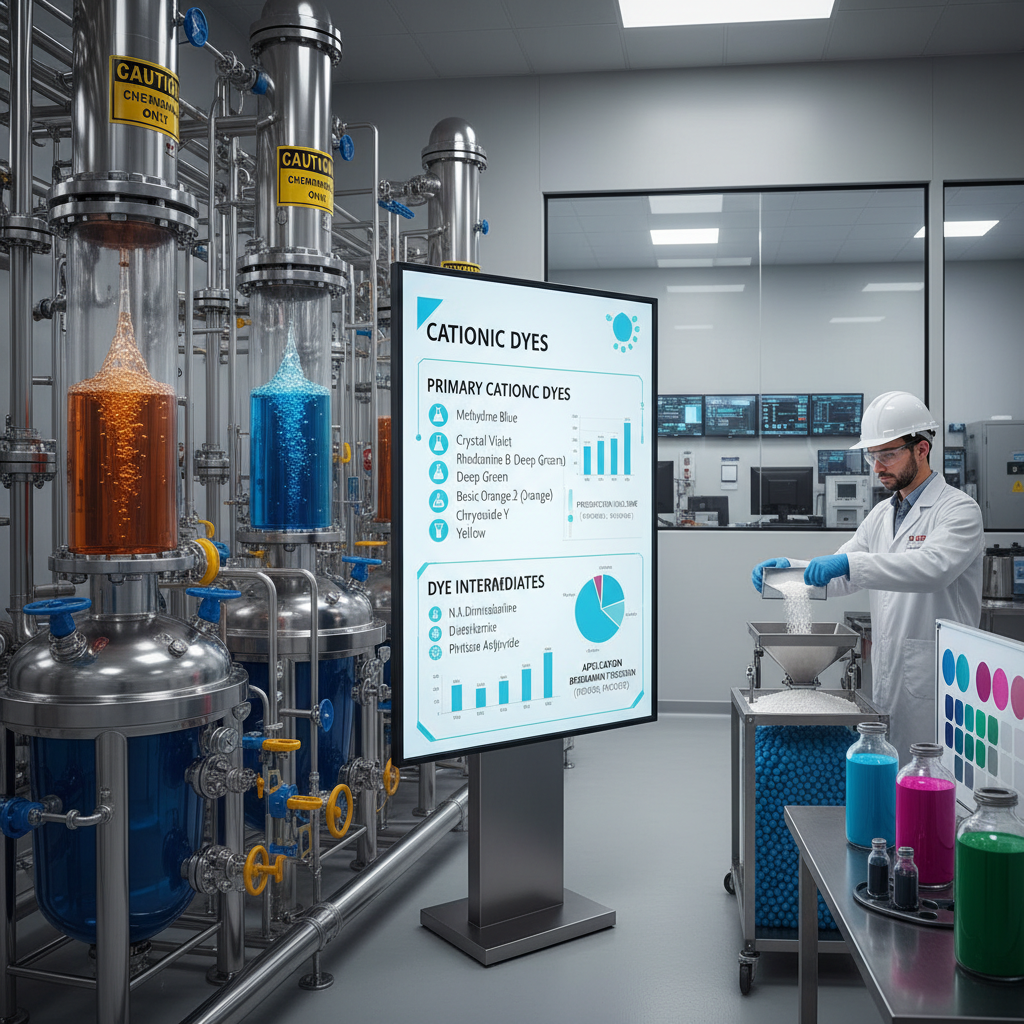
Look, I've been wrestling with concrete, steel, and the realities of construction sites for over fifteen years. And let me tell you, a proper understanding of cationic dyes isn't some lab-coat luxury – it’s fundamental to getting a durable, reliable, and frankly, aesthetically pleasing result. We’re not just slapping colors on things; we're talking about performance characteristics, longevity, and making sure that the final product holds up, whether it's a bridge, a road, or even the colored concrete for a school playground. Knowing your list of cationic dyes allows you to anticipate issues, optimize mixing, and avoid costly rework down the line.
For too long, a lot of us in the field relied on gut feelings and supplier promises when it came to colorants. That’s just not good enough anymore. Regulations are getting tighter, expectations are higher, and the demand for sustainable, high-performance materials is exploding. A solid grasp of the chemistry behind these dyes – what makes them bond, how they react with different aggregates, and how to control the final shade – is becoming a critical skill set. Ignoring the science behind a list of cationic dyes is just leaving money on the table and opening yourself up to problems.
The biggest thing I see is that people underestimate the complexity. It's not just about picking a color chart and adding dye. There’s the base material, the pH level, the water quality, the temperature... it all plays a role. A detailed understanding of list of cationic dyes gives you the tools to navigate those variables and ensure a consistent, high-quality outcome. That’s what separates a good job from a great one, and that's what keeps me coming back for more.
The Core Properties of list of cationic dyes
The key thing to understand about cationic dyes, from a practical standpoint, is their charge. That positive charge is what makes them stick to negatively charged surfaces – think cement particles, textile fibers, even paper. This strong attraction is what gives them superior fastness, meaning the color doesn’t bleed or fade easily. We’re talking about dyes that can withstand harsh weather, abrasion, and constant exposure to UV light. list of cationic dyes are designed for permanence.
Then you’ve got the solubility factor. A good cationic dye needs to dissolve quickly and evenly in the carrier medium – usually water – to ensure uniform coloration. If it doesn't dissolve properly, you'll get streaking, blotches, and an overall uneven finish. That's why understanding the dye's chemical composition and following the manufacturer's recommendations for mixing is crucial. It's not just about dumping something in and hoping for the best.
Global Demand and Market Trends of list of cationic dyes
Globally, the demand for colored materials is steadily rising, driven by construction booms in Asia, infrastructure development in emerging economies, and a growing preference for aesthetically pleasing designs everywhere. The market for cationic dyes, specifically, is expanding because they offer a performance edge over traditional colorants. We're seeing a push towards more sustainable practices, and while some dyes have environmental concerns, advancements are being made to address these.
According to recent reports, the Asia-Pacific region accounts for the largest share of the cationic dyes market, followed by Europe and North America. China is a major producer and consumer, but countries like India and Brazil are also showing significant growth. The key drivers are urbanization, increased disposable incomes, and a demand for higher-quality, longer-lasting colored products.
What I’m seeing on the ground is a shift away from simply wanting 'cheap' color. Clients are willing to pay more for a dye that performs, looks good for years, and doesn’t cause problems down the line. That’s a big win for the higher-quality cationic dyes that prioritize durability and colorfastness.
The Chemistry Behind Color: Understanding Cationic Dye Functionality
Okay, let’s get a little bit into the science, but I’ll keep it practical. Cationic dyes, at their core, are molecules with a positive charge. They’re typically derived from organic compounds and are designed to interact with materials that have a negative charge. Think of it like magnets – opposites attract. This interaction creates a strong bond, locking the dye into the material's structure. It’s why list of cationic dyes are so effective at coloring materials like acrylics, paper, and even modified polymers.
The strength of this bond depends on several factors: the dye's chemical structure, the pH of the solution, the temperature, and the specific material being colored. Understanding these factors is crucial for achieving the desired color intensity and fastness. A slight change in pH can dramatically alter the dye's behavior, so precise control is essential. That’s where a good understanding of the chemical properties comes in.
The way these dyes interact with the material isn’t just surface-level. They actually penetrate into the fibers or matrix, creating a lasting bond. This is fundamentally different from some other types of dyes that simply sit on the surface and wash away over time. That deep penetration is what gives cationic dyes their superior durability.
Performance Characteristics & Durability of list of cationic dyes
When it comes to durability, cationic dyes are a serious step up. They're known for their excellent lightfastness, meaning they resist fading when exposed to sunlight. They also exhibit good wash fastness, meaning the color doesn't bleed or run when the material is washed or cleaned. In real-world terms, that translates to colored concrete that doesn't look washed out after a few years of sun exposure, or textiles that maintain their vibrant colors even after repeated washings.
But it’s not just about aesthetics. The performance of these dyes also impacts the structural integrity of the material. A well-chosen cationic dye won't interfere with the material's strength or flexibility. In fact, some dyes can even enhance certain properties, like UV resistance.
Comparison of list of cationic dyes Fastness Properties
Applications of list of cationic dyes Across Industries
We’re seeing these dyes pop up everywhere. In construction, they’re used to color concrete, mortars, and grouts, offering a wider range of design options. In textiles, they're ideal for dyeing acrylics, modified nylons, and other synthetic fibers, providing vibrant, long-lasting colors. Even in the paper industry, cationic dyes are used to create brightly colored paper products.
I’ve personally used them on projects ranging from highway barriers to architectural facades, and they consistently deliver. The key is understanding the specific application and choosing the right dye formulation for the job. A dye that works great for coloring concrete might not be suitable for dyeing textiles, and vice versa.
Advantages and Long-Term Value of list of cationic dyes
The biggest advantage, hands down, is the longevity. You’re not constantly having to repaint or re-dye something. That saves time, money, and headaches in the long run. The higher upfront cost of quality list of cationic dyes is almost always offset by the reduced maintenance and replacement costs over the lifespan of the product.
Beyond cost savings, there’s a sustainability aspect. By using dyes that last longer, you’re reducing waste and minimizing the environmental impact. Plus, many manufacturers are now developing more eco-friendly cationic dye formulations, further reducing their carbon footprint.
And let’s not forget the aesthetic value. A well-colored structure or product simply looks better. That can enhance brand image, increase property values, and create a more positive experience for the end-user.
Challenges and Future Innovations in list of cationic dyes Technology
One of the biggest challenges is cost. High-quality cationic dyes can be expensive, which can make them less attractive for budget-conscious projects. However, as demand increases and production processes become more efficient, prices are expected to come down. There are also ongoing concerns about the environmental impact of certain dye formulations, but researchers are actively working on developing more sustainable alternatives.
Looking ahead, I see a lot of exciting innovations on the horizon. We’re starting to see the development of self-healing dyes that can repair minor damage, as well as dyes that can change color in response to environmental stimuli. Nanotechnology is also playing a role, with the development of dyes that offer even greater colorfastness and durability.
The future of color is about more than just aesthetics. It's about creating materials that are smarter, more sustainable, and more resilient. And cationic dyes are going to be at the forefront of that revolution.
Brief Summary of Critical Analysis Dimensions for Cationic Dye Selection
| Dye Type |
Application Suitability |
Performance Score (1-10) |
Cost per Unit |
| Basic Blue 41 |
Acrylic Fiber Dyeing |
8 |
$25/kg |
| C.I. Basic Red 1 |
Paper Coloring |
7.5 |
$30/kg |
| C.I. Basic Yellow 2 |
Leather Dyeing |
6 |
$20/kg |
| C.I. Basic Violet 1 |
Textile Printing |
9 |
$35/kg |
| Direct Blue 71 |
Wood Staining |
7 |
$22/kg |
| Direct Red 81 |
Cosmetic Coloring |
8.5 |
$40/kg |
FAQS
That's a good question. Anionic dyes have a negative charge and are typically used for cellulose fibers like cotton. Cationic dyes, with their positive charge, excel at bonding with acrylics, modified nylons, and other materials with a negative surface charge. The charge is what dictates where the dye will bind most effectively. It's all about that electrostatic attraction.
Streaking usually happens when the dye isn't dissolved properly or when the mixing isn't consistent. Always ensure the dye is fully dissolved in water before adding it to the concrete mix. Use a high-shear mixer to ensure even distribution. Also, consider the water quality – hard water can sometimes interfere with the dyeing process. A small test batch is always a good idea.
That’s a complex question. Some older cationic dyes have raised environmental concerns, but manufacturers are increasingly developing more eco-friendly formulations. Look for dyes that are APEO-free and comply with relevant environmental regulations. The trend is moving towards more sustainable dye chemistry, but it’s important to do your research.
Always, always do a small-scale test batch! Mix a representative sample of the material you'll be dyeing with different concentrations of the dye. Let it dry completely and evaluate the color under the same lighting conditions you’ll see in the final application. This will save you a lot of headaches and rework down the line.
Temperature influences the rate of dye absorption. Higher temperatures generally speed up the process, but can also lead to uneven coloring. pH plays a critical role – the optimal pH range varies depending on the specific dye. Maintaining the correct pH ensures the dye remains soluble and bonds effectively with the material. Always check the dye manufacturer’s recommendations.
Always wear appropriate personal protective equipment (PPE), including gloves, eye protection, and a respirator, especially when handling dye powders. Work in a well-ventilated area to avoid inhaling dust. Avoid contact with skin and eyes. Refer to the Safety Data Sheet (SDS) for detailed safety information and handling instructions.
Conclusion
So, there you have it. Understanding list of cationic dyes isn't just about picking a pretty color. It's about knowing the chemistry, understanding the applications, and choosing the right dye for the job. It's about building durable, long-lasting products that perform well and look good for years to come. And that’s what matters in this business.
The future of coloration is heading towards more sustainable, high-performance dyes. Invest in learning the science, stay up-to-date on the latest innovations, and don't be afraid to experiment. The payoff – in terms of quality, cost savings, and customer satisfaction – will be well worth the effort. For a comprehensive range of cationic dyes and expert advice, visit our website: www.yanhongchem.com.